 Catalogue PIGMA
/Physical Environment/Climatology
Type of resources
Available actions
Topics
Keywords
Contact for the resource
Provided by
Years
Formats
Representation types
status
Resolution
-

ERA‐40 is a re‐analysis of meteorological observations from September 1957 to August 2002 produced by the European Centre for Medium‐Range Weather Forecasts (ECMWF)
-
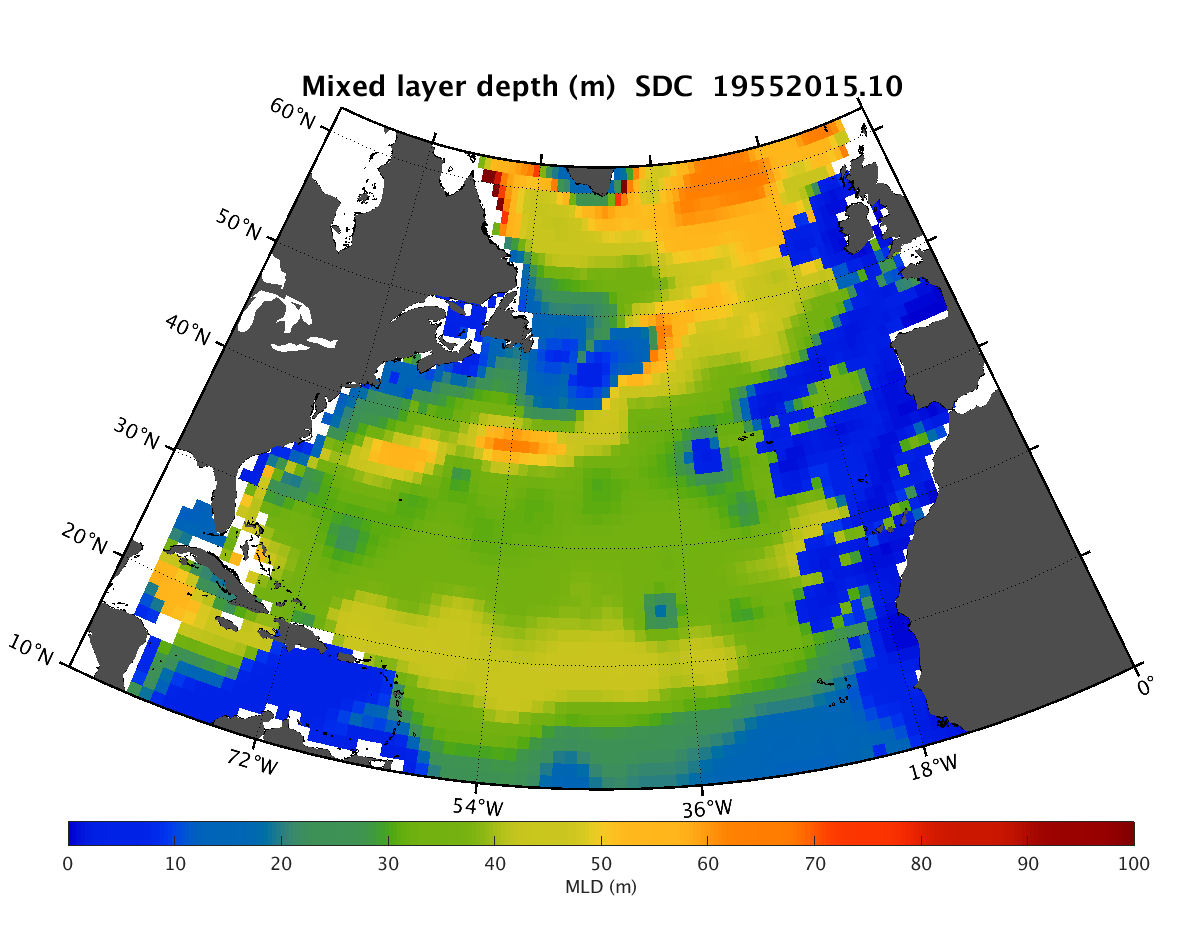
The SDC_NAT_DP1 product contains the North Atlantic Ocean monthly climatology for mixed layer depth (MLD) based on temperature climatology spanning 60 years (1955-2015). The MLD fields have spatial resolution 1/4°. The profiles of temperature combines data from 2 major sources, the SeaDataNet infrastructure and a part of data of the Coriolis Ocean Dataset for Reanalysis (CORA). The used climatology is the SeaDataCloud North Atlantic Ocean Temperature Climatology V1 (https://doi.org/10.13155/61810) done with the DIVA software, version 4.7.2. The product was developed in framework of the SeaDataCloud project. This product must be considered as feasibility study for the next phases, it is a beta-version and that further research needs to be done before its usage from users.
-
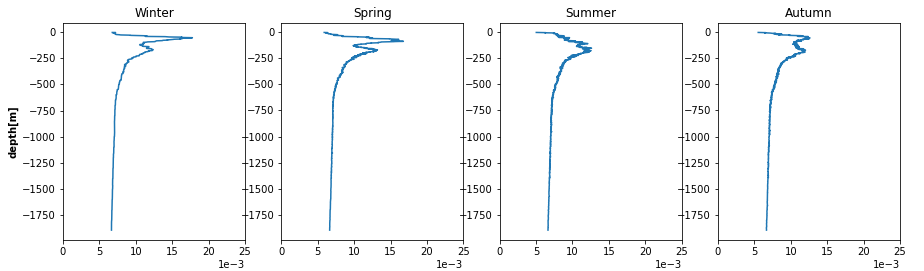
The SDC_GLO_CLIM_N2 product contains seasonally averaged Brunt-Vaisala squared frequency profiles using the density profiles computed in SeadataCloud Global Ocean Climatology - Density Climatology. The Density Climatology product uses the Profiling Floats (PFL) data from World Ocean database 18 for the time period 2003 to 2017 with a Nonlinear Quality procedure applied on it. Computed BVF profiles are averaged seasonally into 5x5 degree boxes for Atlantic and Pacific Oceans. For data access, please register at http://www.marine-id.org/.
-
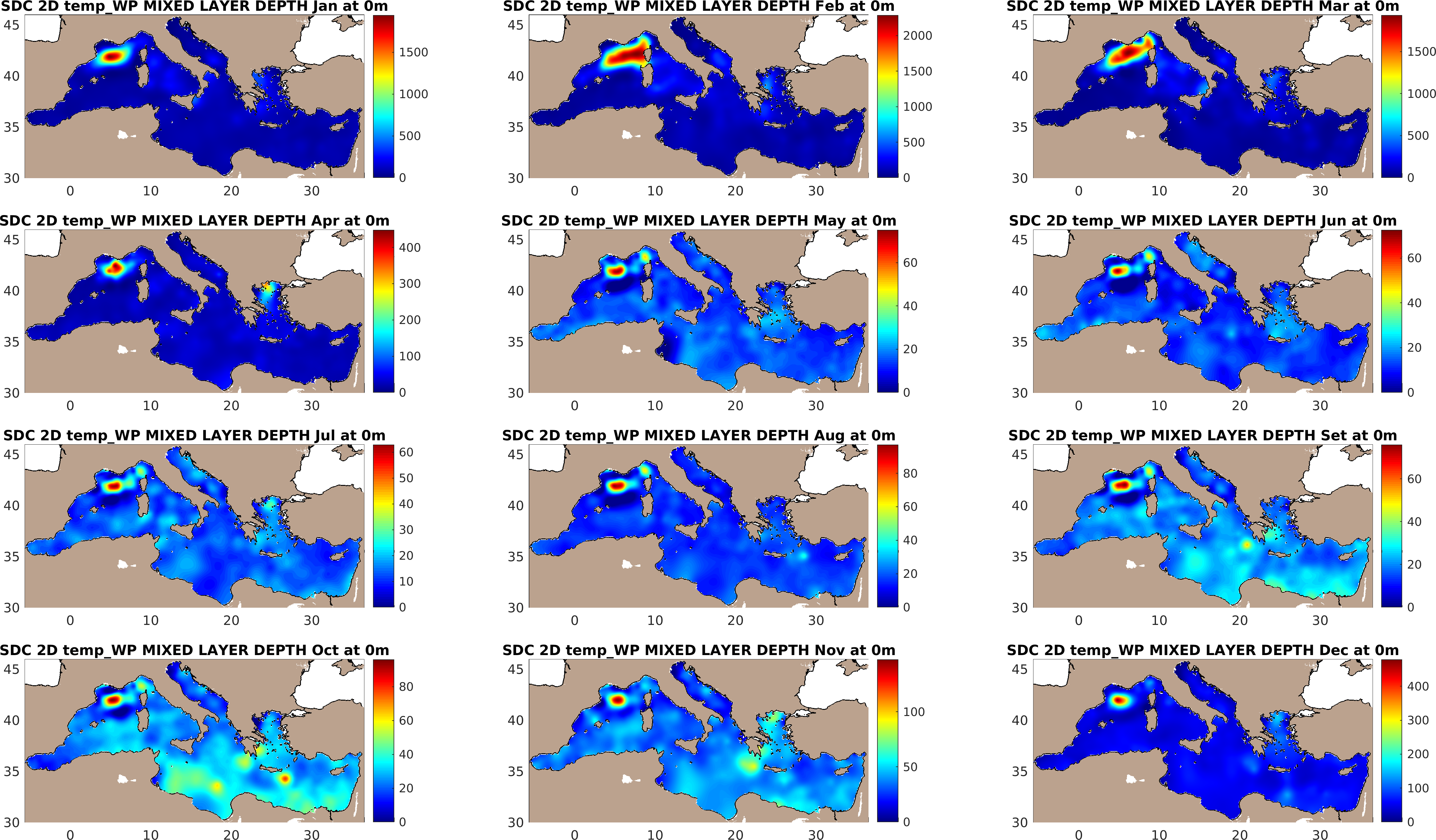
The SDC_MED_DP1 consists of Mixed Layer Depth (MLD) monthly climatology at 1/8 of degree for the Mediterranean Sea computed from an integrated dataset of collocated temperature and salinity profiles which combines data extracted from SeaDataNet infrastructure (SDC_MED_DATA_TS_V1, https://doi.org/10.12770/2698a37e-c78b-4f78-be0b-ec536c4cb4b3) and the Coriolis Ocean Dataset for Reanalysis (CORA), version 5.2 (https://archimer.ifremer.fr/doc/00595/70726/). The products comprehends three versions of MLD climatology over the 1955-2017 time period obtained computing the MLD from three different methods. A MLD climatology for the time span 1987-2017 computed with the fixed density criteria is also available. The analysis was done with the DIVAnd (Data-Interpolating Variational Analysis in n dimensions), version 2.6.1.
-
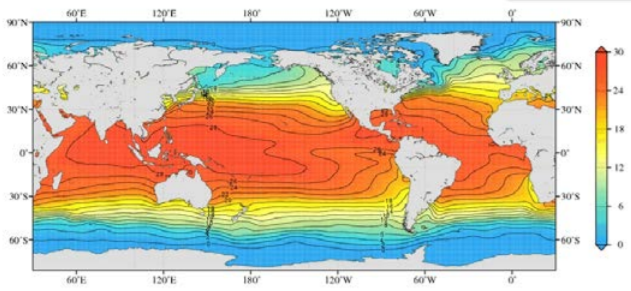
Climatologie de température/salinité de l'océan global basée sur une analyse objective: résolution 1/4° et 1°
-
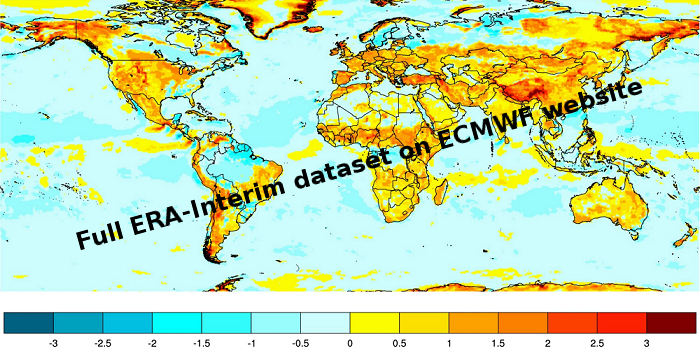
ERA-Interim is a dataset, showing the results of a global climate reanalysis from 1979 to date. ERA-Interim continues to be updated in near-real-time as new data becomes available.
-
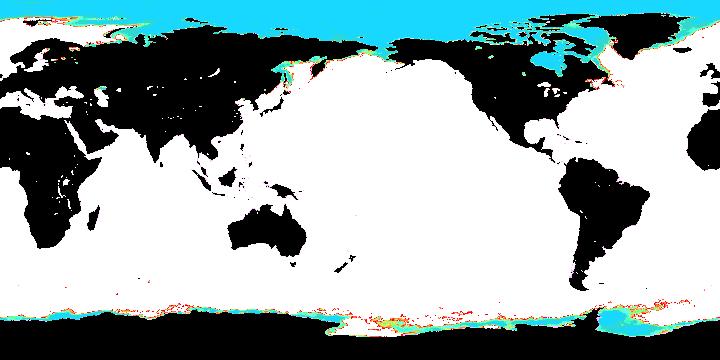
The National Centers for Environmental Prediction (NCEP) Climate Forecast System (CFS) is initialized four times per day (0000, 0600, 1200, and 1800 UTC). NCEP upgraded their operational CFS to version 2 on March 30, 2011. This is the same model that was used to create the NCEP Climate Forecast System Reanalysis (CFSR), and the purpose of this dataset is to extend CFSR. The 6-hourly atmospheric, oceanic and land surface analyzed products and forecasts, available at 0.2, 0.5, 1.0, and 2.5 degree horizontal resolutions, are archived here beginning with January 1, 2011 as an extension of CFSR.
-
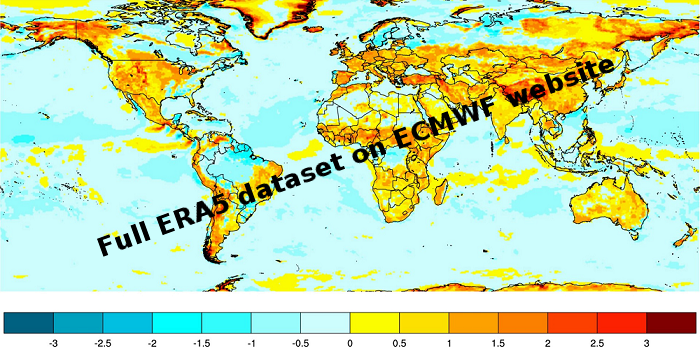
ERA5 is a climate reanalysis dataset, covering the period 1979 to present. ERA5 is being developed through the Copernicus Climate Change Service (C3S). Extracted data available here are one hourly at a regular grid lat,lon 0.25*0.25
-
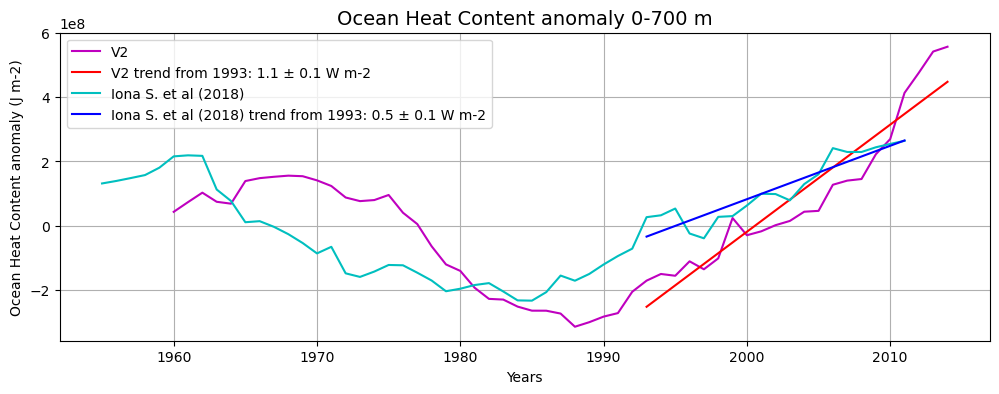
The SDC_MED_DP2 product contains 55 sliding decadal temperature fields (1955-1964, 1956-1965, 1957-1966, …, 2009-2018) at 1/8° horizontal resolution obtained in the 0-2000m layer and two derived OHC annual anomaly estimates for the 0-700m and the 0-2000m layers. Sliding decades of annual Temperature fields were obtained from an integrated Mediterranean Sea dataset covering the time period 1955-2018, which combines data extracted from SeaDataNet infrastructure at the end of July 2019 (SDC_MED_DATA_TS_V2, https://doi.org/10.12770/3f8eaace-9f9b-4b1b-a7a4-9c55270e205a) and the Coriolis Ocean Dataset for Reanalysis (CORA 5.2, accessed in July 2020, https://archimer.ifremer.fr/doc/00595/70726/). The resulting annual OHC anomaly time series span the 1960-2014 period. The analysis was performed with the DIVAnd (Data-Interpolating Variational Analysis in n dimensions), version 2.6.1.
-
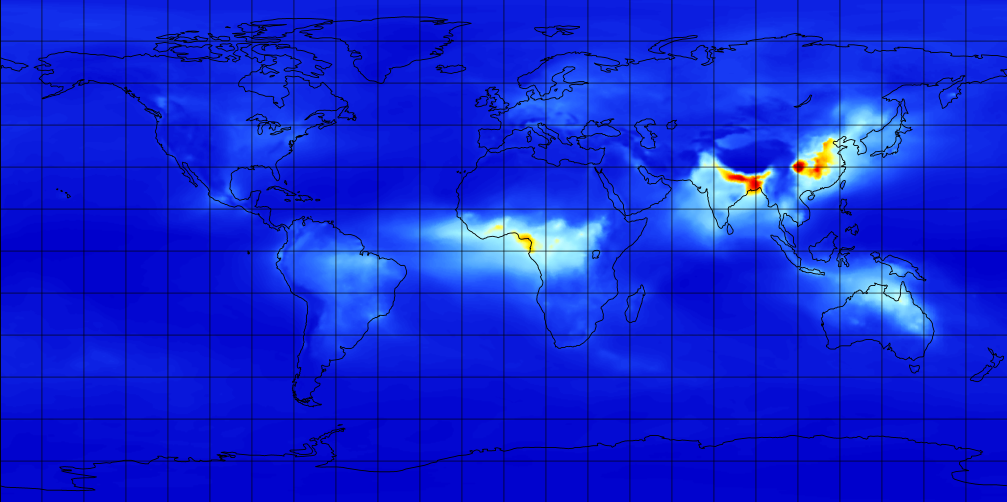
M2TMNXAER (or tavgM_2d_aer_Nx) is a time-averaged 2-dimensional monthly mean data collection in Modern-Era Retrospective analysis for Research and Applications version 2 (MERRA-2). This collection consists of assimilated aerosol diagnostics, such as column mass density of aerosol components (black carbon, dust, sea salt, sulfate, and organic carbon), surface mass concentration of aerosol components, and total extinction (and scattering ) aerosol optical thickness (AOT) at 550 nm. The total PM1.0, PM2.5, and PM10 may be derived with the formula described in the FAQs under the Documentation tab of this page. The collection also includes variance of certain parameters. MERRA-2 is the latest version of global atmospheric reanalysis for the satellite era produced by NASA Global Modeling and Assimilation Office (GMAO) using the Goddard Earth Observing System Model (GEOS) version 5.12.4. The dataset covers the period of 1980-present with the latency of ~3 weeks after the end of a month.