 Catalogue PIGMA
2008
Type of resources
Available actions
Topics
Keywords
Contact for the resource
Provided by
Years
Formats
Representation types
Update frequencies
status
Scale
Resolution
-
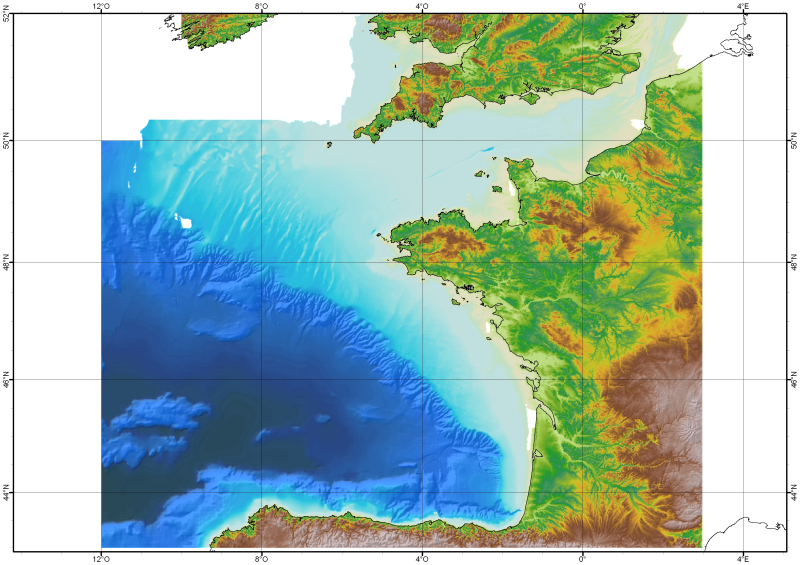
The Digital Terrain Model of the Bay of Biscaye and of the Channel is the result of the processing of a compilation of single and multibeam echosounder data, of DTMs and of chart countours produced before 2008 for hydrodynamic modeling..
-
Auteur(s): Lehembre Adrien , Projet de reconversion d'un bâtiment industriel situé en centre ville touristique en un centre culturel intégrant médiathèque, librairie ainsi que d'un lieu d'exposition à Bergerac (Dordogne)
-
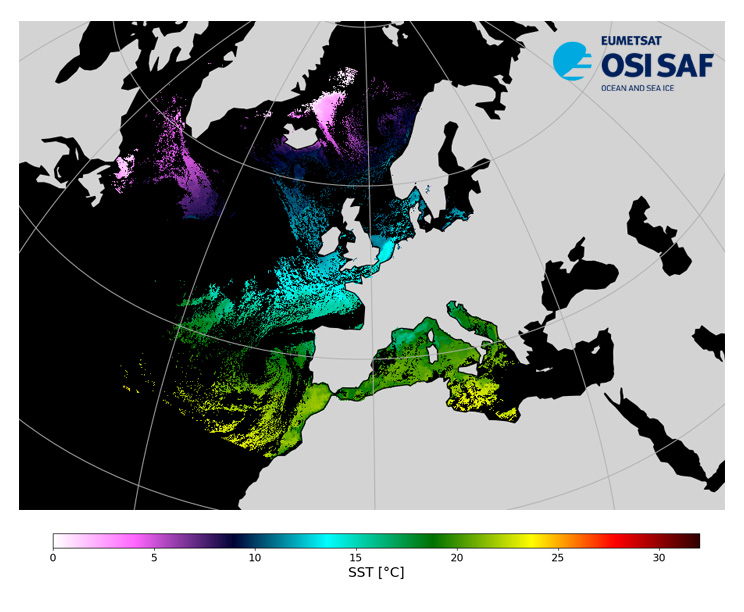
Level 3, four times a day, sub-skin Sea Surface Temperature derived from AVHRR on Metop satellites and VIIRS or AVHRR on NOAA and NPP satellites, over North Atlantic and European Seas and re-projected on a polar stereographic at 2 km resolution, in GHRSST compliant netCDF format. This catalogue entry presents Metop-A North Atlantic Regional Sea Surface Temperature. SST is retrieved from infrared channels using a multispectral algorithm and a cloud mask. Atmospheric profiles of water vapor and temperature from a numerical weather prediction model, Sea Surface Temperature from an analysis, together with a radiative transfer model, are used to correct the multispectral algorithm for regional and seasonal biases due to changing atmospheric conditions. The quality of the products is monitored regularly by daily comparison of the satellite estimates against buoy measurements. The product format is compliant with the GHRSST Data Specification (GDS) version 2.Users are advised to use data only with quality levels 3,4 and 5.
-
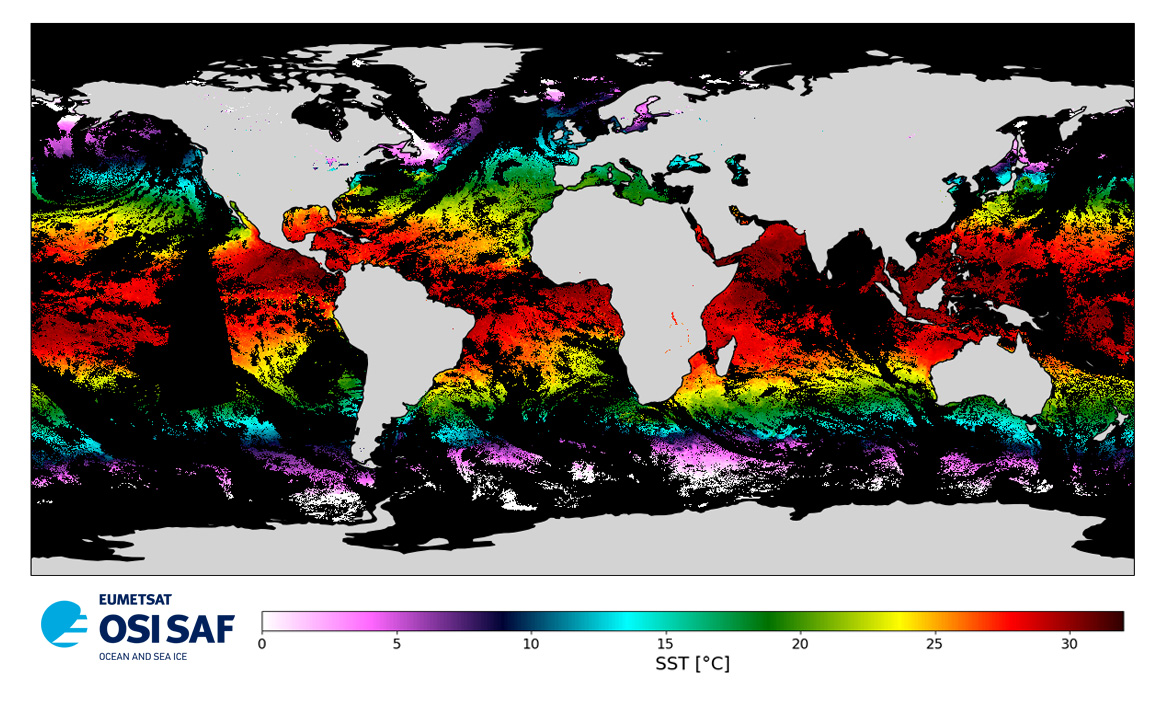
Level 3 twice-daily sub-skin Sea Surface Temperature derived from AVHRR on Metop-A, global and re-projected on a 0.05° regular grid, in GHRSST compliant netCDF format. The satellite input data has successively come from Metop-A and Metop-B level 1 data processed at EUMETSAT. SST is retrieved from AVHRR infrared channels (3.7, 10.8 and 12.0 µm) using a multi-spectral algorithm and a cloud mask. Atmospheric profiles of water vapor and temperature from a numerical weather prediction model, Sea Surface Temperature from an analysis, together with a radiative transfer model, are used to correct the multispectral algorithm for regional and seasonal biases due to changing atmospheric conditions.The quality of the products is monitored regularly by daily comparison of the satellite estimates against buoy measurements. The product format is compliant with the GHRSST Data Specification (GDS) version 2. Users are advised to use data only with quality levels 3, 4 and 5.
-

Les centres d'incendie et de secours sont les unités territoriales chargées principalement des missions de secours. Date de Publication : 2009
-
Carte Communale (CC) numérisée. Ce lot informe du droit à bâtir sur la commune de SAINT-FRONT-SUR-NIZONNE. Cette CC est numérisée conformément aux prescriptions nationales du CNIG.
-
Recensement des sites web sur le territoire Aquitain réalisé en 2008, par Julien Gelly et Mérillou Franck dans le cadre de leur stage à AEC (Aquitaine Europe Communication) en liaison avec l'UMR 5185 ADES (Aménagement, Développement, Environnement, Santé et Sociétés) Université Michel de Montaigne Bordeaux 3 1876 sites internet, tous secteurs confondus, ont été référencés à partir de l'annuaire Yahoo! en Aquitaine. La Base de Données se compose de différents indicateurs : - Indicateurs d'identification : Nom de l'établissement, Nom du Site, URL du Site, Nom de la Commune, Code INSEE, Codes NAF 2003 et 2008.
-
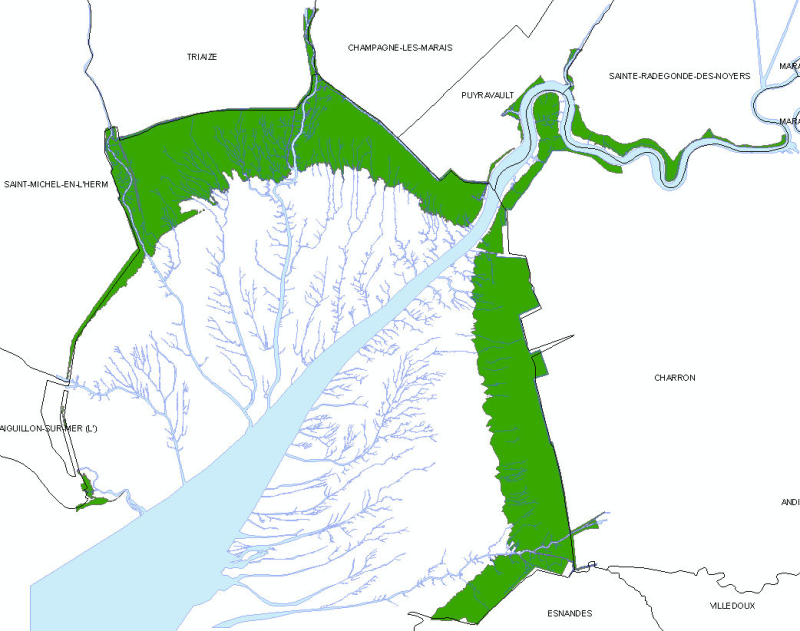
Cette cartographie, sous forme de polygone représente le contour des groupements végétaux numérisés en 2001-2002 (en superficie recouverte par le groupement) dans les prés salés de la Réserve Naturelle de la Baie de l'Aiguillon.
-
Suivis satellitaires de 6 jeunes Caretta caretta en Atlantique Nord-Est en 2008. Les individus ont été réhabilités au C.E.S.T.M. après leur échouage sur la façade Manche-Atlantique puis relâchés.
-

Position géographique des points de mesure du service SPEL de la Direction Départementale de l'Equipement Charente maritime au débouché des réseaux "pluviaux" côtiers débouchant dans le Pertuis breton et indicateurs établis à partir des valeurs de 1998 à 2002.